🆕 Theory
This chapter describes HELM support in OEChem TK, which currently enables the representation of linear and macrocyclic peptides through their amino acid sequences. To become familiar with the notation, it is highly recommended to read the original publication [Zhang-2012].
Warning
HELM representation is useful for encoding peptides with complex structures, however we DO NOT RECOMMEND using it as a unique identifier or as a primary format for storing peptide information.
The reason for the former is that a single peptide can be represented by multiple valid HELM strings. While the algorithm implemented in OEChem TK for generating HELM strings has been extensively tested for consistency, it does not guarantee that the same peptide will always be represented by the same HELM string. Furthermore, the capability to modify and extend the monomer set by the user can lead to changes in the generated HELM strings for the same peptide even with the same algorithm.
The reason for the latter is that HELM is not a self contained format. It relies on external monomer definitions which can be modified by the user at will. Storing peptide purely as HELM strings without knowing which monomer set was used to generate them can lead to losing the ability to reconstruct the original atomic-level molecular structure. We recommend using other representations such as SMILES as your primary format and generating HELM strings on demand for specific use cases.
Monomers
Monomers are the fundamental building blocks of peptides. To define a monomer for use in OEChem TK, the following information must be provided:
the monomer’s structure as SMILES with explicitly defined connection points
the polymer type of the monomer (
PeptideorChem) — OEChem TK does not currently support RNA monomersthe monomer type (
BackboneorTerminal)a unique mnemonic code that unambiguously identifies the monomer
Assigning a descriptive name (for example, an IUPAC name) to a monomer is optional.
Monomers with Peptide Polymer Type
Monomers are characterized as Peptide if they can appear in the PEPTIDE polymer chain.
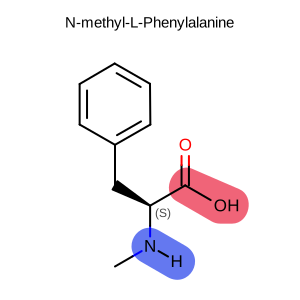
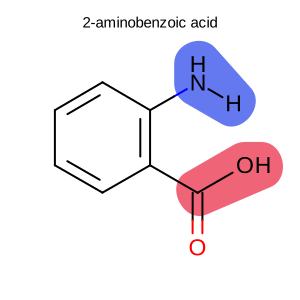
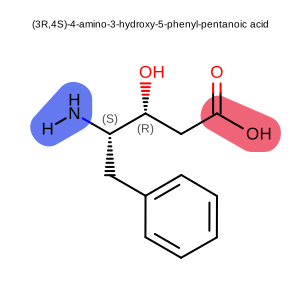
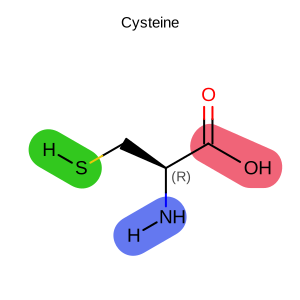
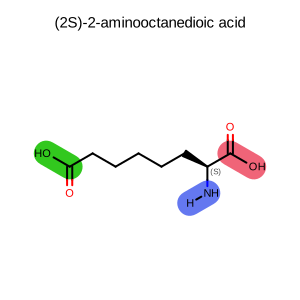
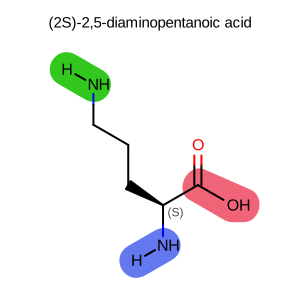
Most of the monomers in this category are backbone amino-acids with the following constraints:
R1 (N-terminus) defines connection point on the nitrogen atom of the amino group
R2 (C-terminus) defines connection point on the carbon atom of the carboxyl group
R3 optionally can define side-chain connections
having α, β, γ or δ backbone
|
|
|
|
|
|
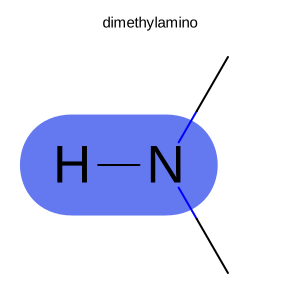
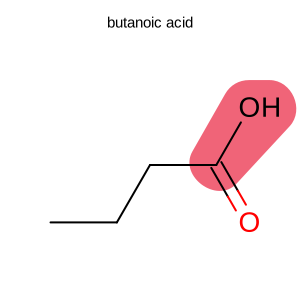
However, non-peptidic monomers can also belong to the Peptide category if
it has only one R1 amino group connection point — used at the C-terminus
it has only one R2 carboxyl group connection point — used at the N-terminus
|
|
C-terminal |
N-terminal |
Monomers with Chem Polymer Type
Non-peptidic monomers that do not fit into the Peptide category, with
arbitrary connection points.
Monomers with Unspecified Stereochemistry
The current implementation of OEChem TK does not support monomers with unspecified stereochemistry. Atom or bond stereo must be explicitly defined in the monomer structure for it to be successfully mapped to a molecule when generating a HELM string.
See also: Handling Molecules with Unspecified Stereochemistry section below for handling molecules with unspecified stereochemistry when generating HELM strings.
Defining Monomer Connection Points
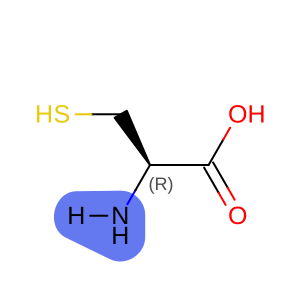
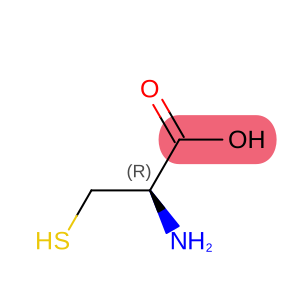
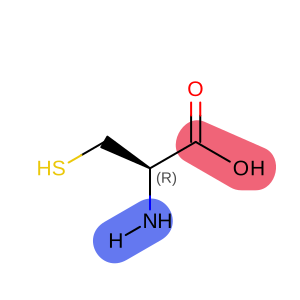
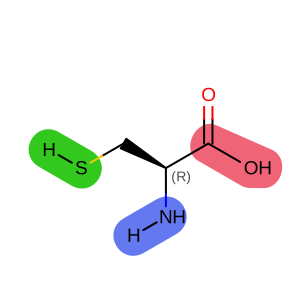
When adding a monomer to a monomer set, an equivalency test is performed based on the canonical SMILES of the monomer without considering the R-groups. The table below shows the same cysteine monomer defined with different connection points. Only one of these can be added to the monomer set, since they are considered equivalent. It is recommended to define monomers with as many connection points as possible to maximize their versatility in peptide design. For example, the cysteine monomer defined with three connection points (see Table 4, example D) can be used in a wider variety of contexts.
A |
B |
C |
D - RECOMMENDED |
|
|
|
|
can be used only as C-terminal |
can be used only as N-terminal |
can be used as any terminal or backbone |
can be used as terminal, backbone or cross-linker |
OEChem TK Built-in Monomer Sets
There are two built-in monomer sets supported by OEChem TK:
“Standard” — contains 20 standard amino acids in the code-set named Standard
“OpenEye” — contains about 260 diverse monomers defined in five code-sets named: OpenEye, Standard, PDB, and ChEMBL.
Warning
These built-in monomer sets are provided to test and demonstrate support for diverse peptide structures and to serve as guidance for customers building their own private monomer sets. We strongly discourage users from relying solely on the OpenEye-provided monomer sets, as they are subject to change. No guarantee is made that monomers will not be added, removed, or modified within these sets. Instead, users should maintain their own version, allowing them to add the monomers needed to support their research and to adopt the naming conventions preferred by their organization.
See also
📁 OELoadStandardMonomerSet and OELoadOpenEyeMonomerSet functions to load built-in monomer sets
📁 OEReadMonomerSet function to load custom monomer sets
HELM
The order of monomers in a HELM peptide chain is directional. Each chain lists its monomers from the N-terminus to the C-terminus. In the example below, the peptide begins with proline (P) at the N-terminus and ends with glutamic acid (E) at the C-terminus.
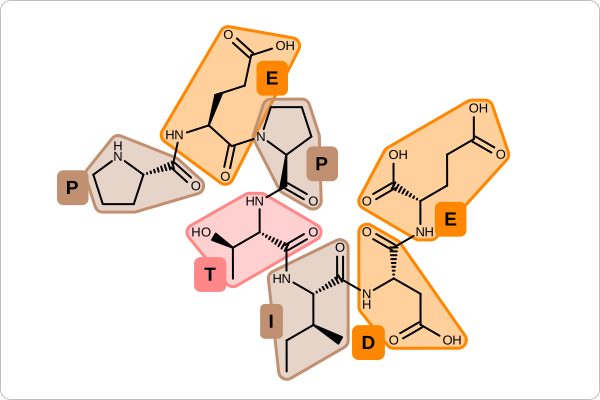
PEPTIDE1{P.E.P.T.I.D.E}$$$$
Each dot in the chain represents the amide bond formed between adjacent amino acids. It indicates that the carboxyl connection point (R2) of the monomer on the left is connected to the amino (R1) connection point of the monomer on the right.
Additional bonds between the monomers are defined in the second component of the HELM string.
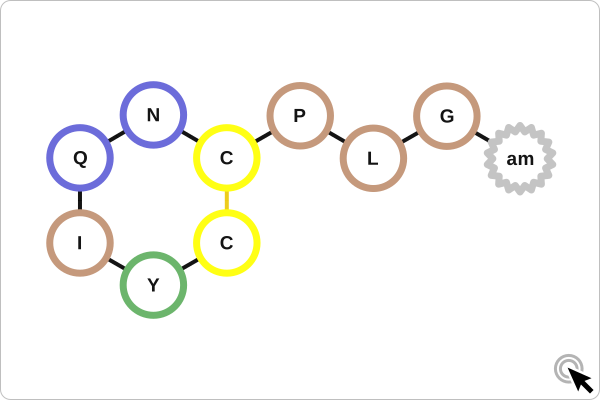
In the oxytocin example below, the first and sixth monomers of the same PEPTIDE1 polymer
chain are connected.
In this case, the connection is a disulfide bond formed through the R3 side-chain connection
points of the two cystine monomers. This connection is encoded as PEPTIDE1,PEPTIDE1,1:R3-6:R3
oxytocin
PEPTIDE1{C.Y.I.Q.N.C.P.L.G.[am]}$PEPTIDE1,PEPTIDE1,1:R3-6:R3$$$$$
Peptides can also be cyclized by a lactam bridge commonly connecting side chains (e.g., Lys-Asp or Lys-Glu).
Multiple connections are separated by |.
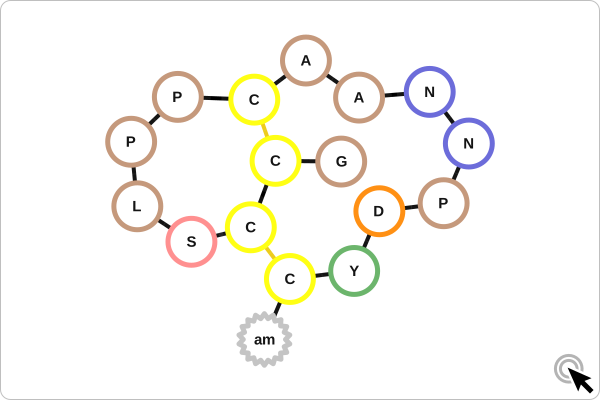
Conotoxins such as α-conotoxin PnIA, depicted below, generally feature several disulfide bonds that stabilize their
three-dimensional structure.
α-conotoxin PnIA
PEPTIDE1{G.C.C.S.L.P.P.C.A.A.N.N.P.D.Y.C.[am]}$PEPTIDE1,PEPTIDE1,2:R3-8:R3|PEPTIDE1,PEPTIDE1,3:R3-16:R3$$$
HELM Parsing
In OEChem, a HELM string can be parsed using the OEHelmToMol function.
See also
🆕 Convert HELM to SMILES example
📁 OEHelmToMol function
Embedded SMILES
OEChem TK supports reading of HELM with embedded SMILES in various styles. The usage of embedded SMILES is necessary for defining a peptide that contains an unnamed monomer.
The following three formats define the same eledoisin structure
The most compact representation with R-group style:
PEPTIDE1{[N1[C@@H](CCC1=O)C([R2])=O].P.S.K.D.A.F.I.G.L.M.[am]}$$$$Representation using atom mapping to mark attachment points
PEPTIDE1{[N1[C@@H](CCC1=O)C([*:2])=O].P.S.K.D.A.F.I.G.L.M.[am]}$$$$CXSMILES style representation
PEPTIDE1{[N1[C@@H](CCC1=O)C(*)=O |$;;;;;;;_R2;$|].P.S.K.D.A.F.I.G.L.M.[am]}$$$$
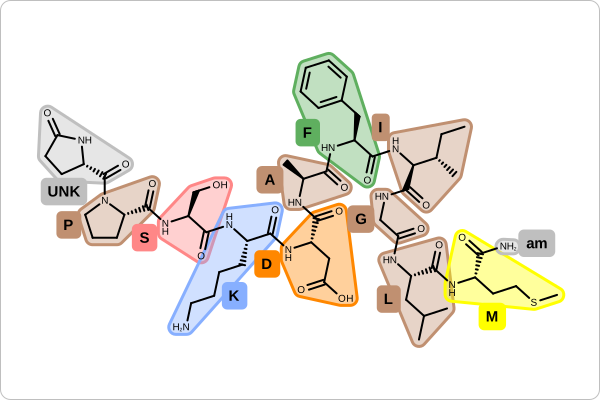
Eledoisin
In the case of an embedded SMILES, the attachment-point mapping must follow the same rules as it would if the structure were defined as a named peptide monomer.
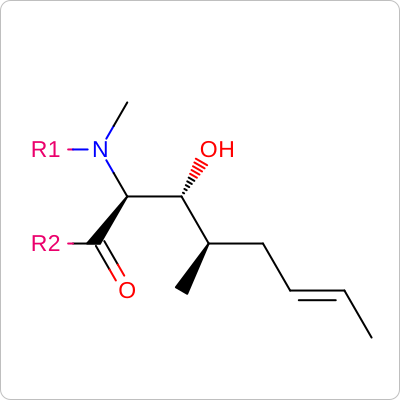
[R2]C(=O)[C@H]([C@@H]([C@H](C)C/C=C/C)O)N([R1])C
R1 (N-terminus) in the embedded SMILES is defined as the connection point on the nitrogen atom of the amino group
R2 (C-terminus) in the embedded SMILES is defined as the connection point on the carbon atom of the carboxyl group
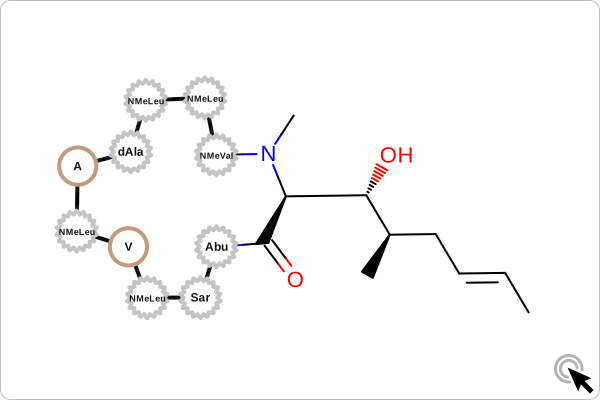
See the unnamed fragment depicted on the left and how it is used to define CyclosporinA below.
Cyclosporin A
PEPTIDE1{[Abu].[Sar].[MeL].V.[MeL].A.a.[MeL].[MeL].[MeV].[[R2]C(=O)[C@H]([C@@H]([C@H](C)C/C=C/C)O)N([R1])C]}$PEPTIDE1,PEPTIDE1,11:R2-1:R1$$$
Helm Generation
In OEChem, a HELM string can be generated using the OEMolToHelm function.
See also
🆕 Convert SMILES to HELM example
📁 OEMolToHelm function
Tautomer Handling
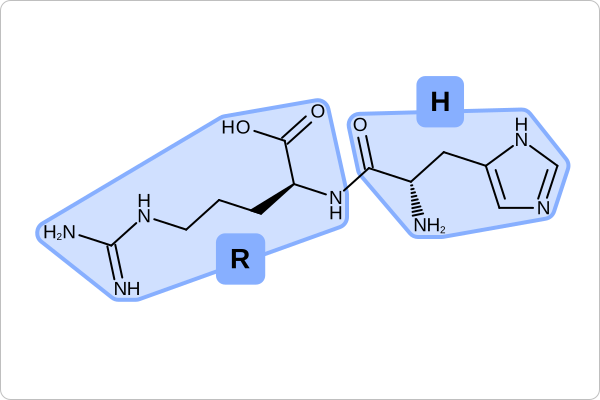
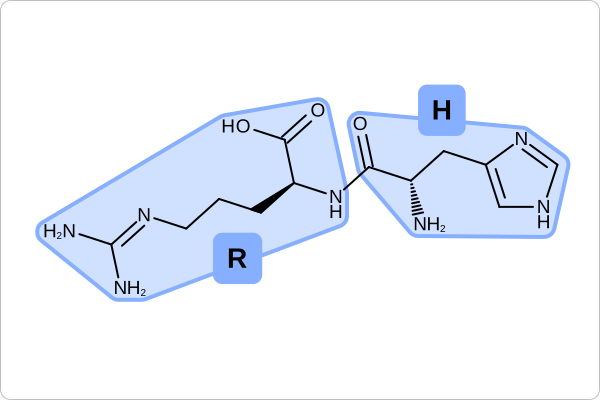
When mapping monomers onto a molecule to determine its sequence, bond orders in aromatic rings and certain functional groups (such as guanidine) are handled in a way that enables successful generation of HELM strings across different tautomeric forms.
|
|
|
input SMILES |
c1c([nH]cn1)C[C@@H](C(=O)N[C@@H](CCCNC(=N)N)C(=O)O)N |
c1c(nc[nH]1)C[C@@H](C(=O)N[C@@H](CCCN=C(N)N)C(=O)O)N |
output HELM |
PEPTIDE1{H.R}$$$$ |
PEPTIDE1{H.R}$$$$ |
Handling Charged Molecules
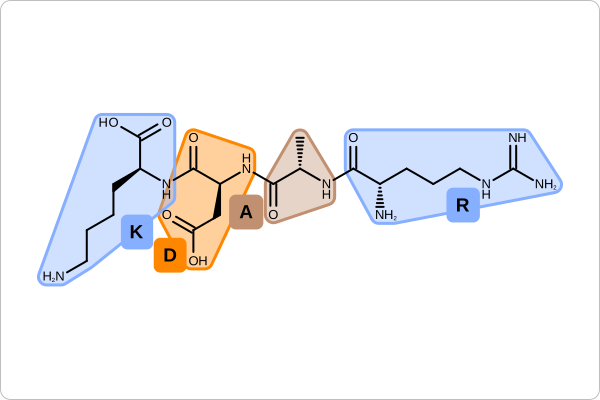
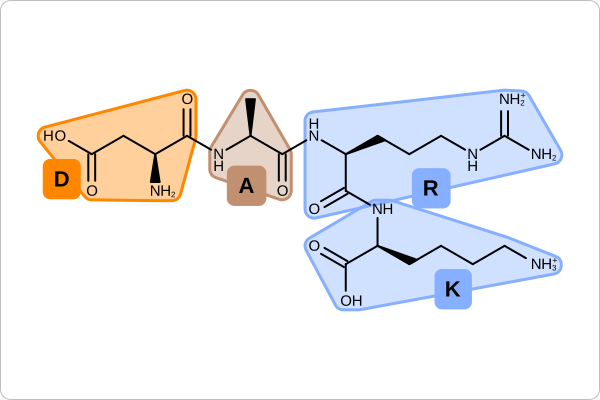
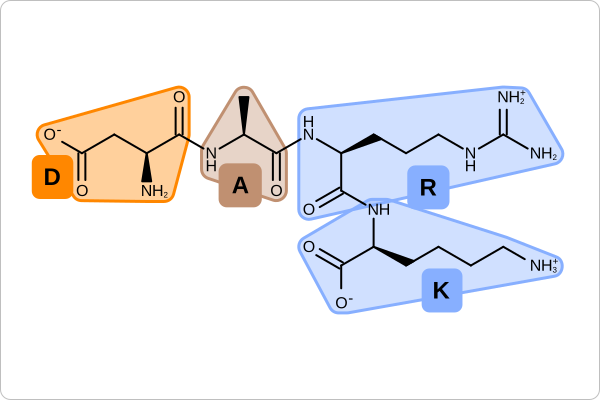
It is strongly recommended to define monomers in their neutral form, enabling matching of both charged and uncharged peptides when generating HELM representations.
Structure A |
Structure B |
Structure C |
|
|
|
PEPTIDE1{D.A.R.K}$$$$ |
PEPTIDE1{D.A.R.K}$$$$ |
PEPTIDE1{D.A.R.K}$$$$ |
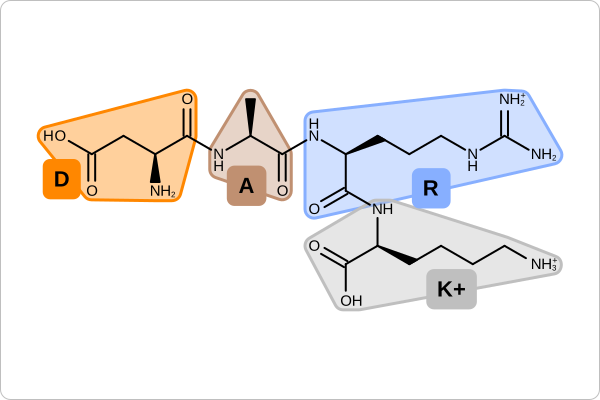
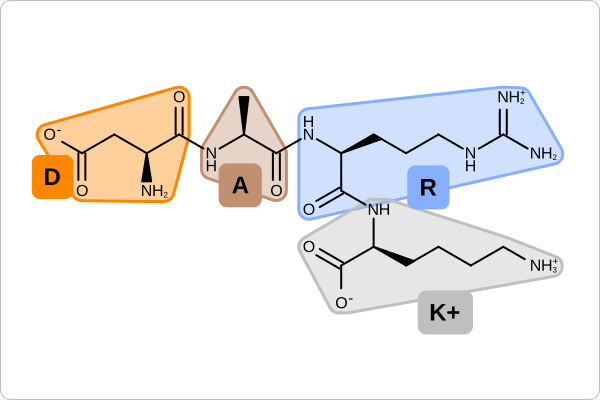
If a monomer contains a positively or negatively charged atom, that atom can only be
matched to an atom in a peptide that has the same formal charge.
For example, if protonated lysine 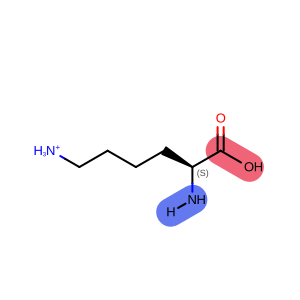 (
([NH3+]CCCC[C@@H](C(=O)[OH:2])N[H:1]) is added to the “Standard” monomer set
with the code K+, this monomer will match both structure B and C
in the example below.
Structure A |
Structure B |
Structure C |
|
|
|
PEPTIDE1{D.A.R.K}$$$$ |
PEPTIDE1{D.A.R.[K+]}$$$$ |
PEPTIDE1{D.A.R.[K+]}$$$$ |
Handling Molecules with Unspecified Stereochemistry
Monomer detection is stereochemistry-sensitive when generating a peptide sequence. Because the current implementation does not support monomers with unspecified stereochemistry, HELM generation automatically fails for any structure with undefined stereo. However, it is still possible to generate a valid HELM string by disabling the stereochemistry check and allowing monomers with unspecified stereo to be encoded as embedded SMILES in the generated HELM.
See also Helm Generation Options section of smiles2helm for more explanation and examples.
Peptide Cyclization and Cross-links
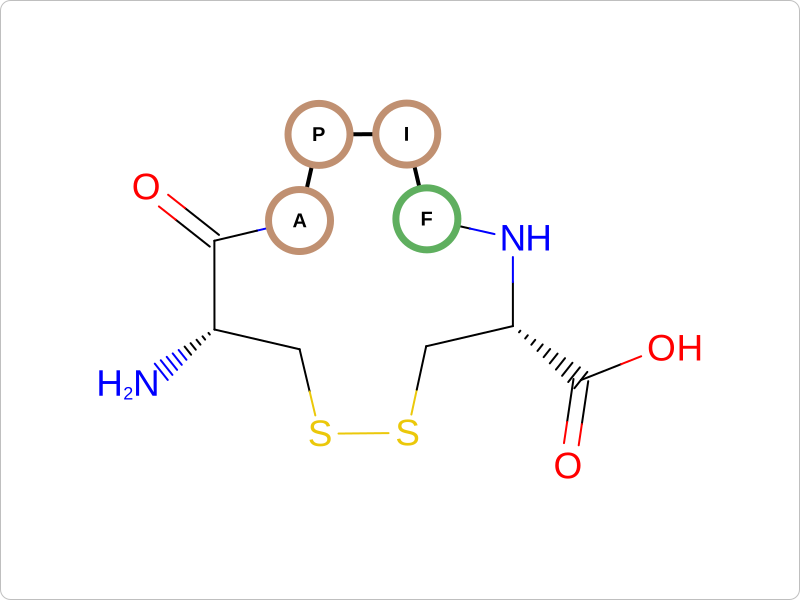
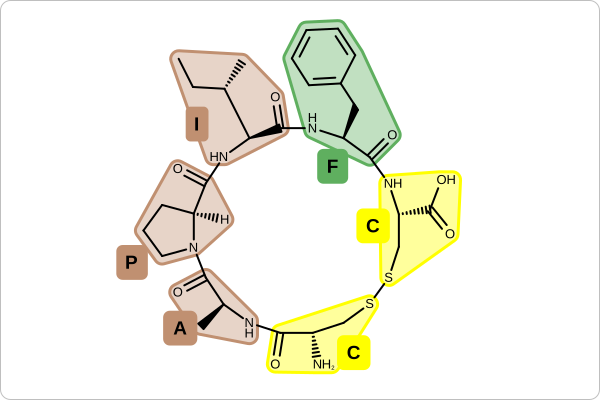
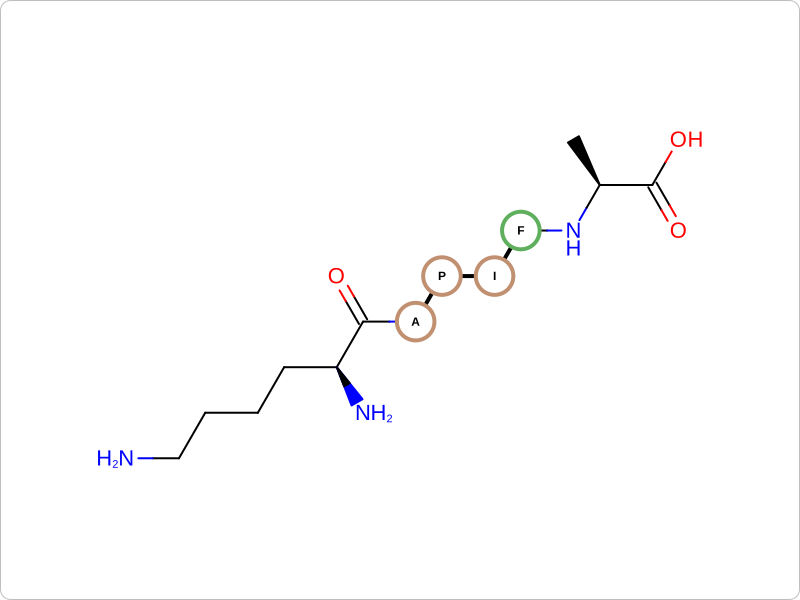
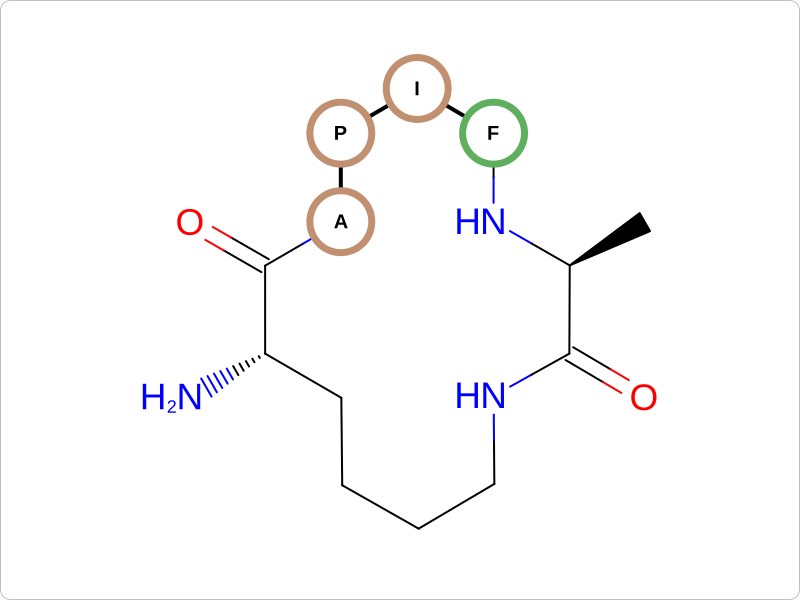
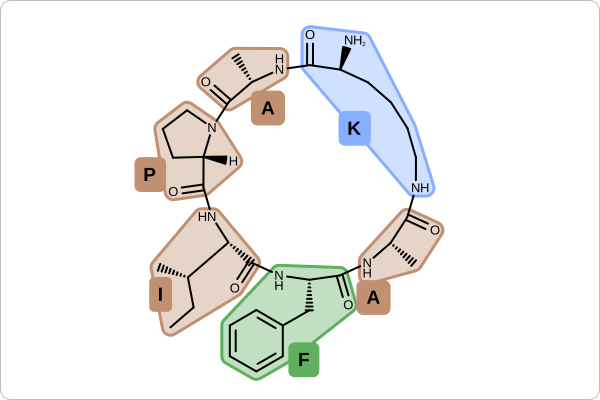
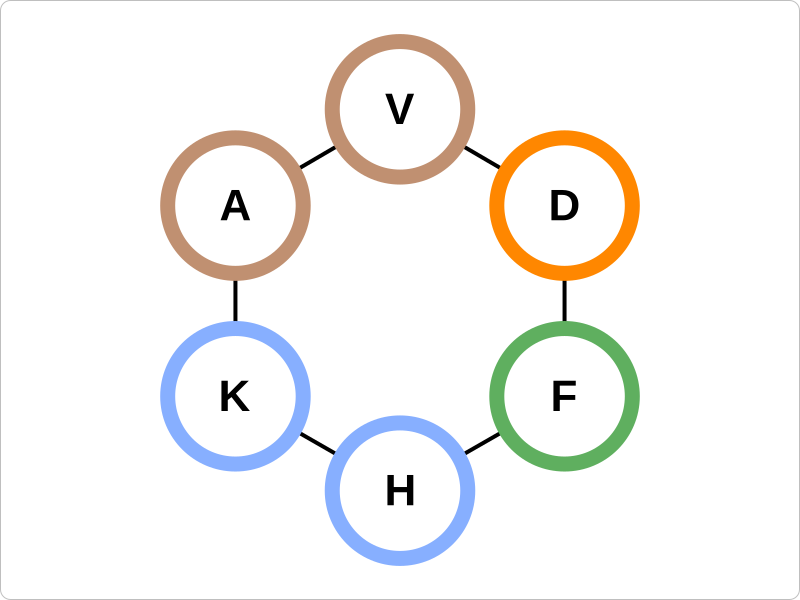
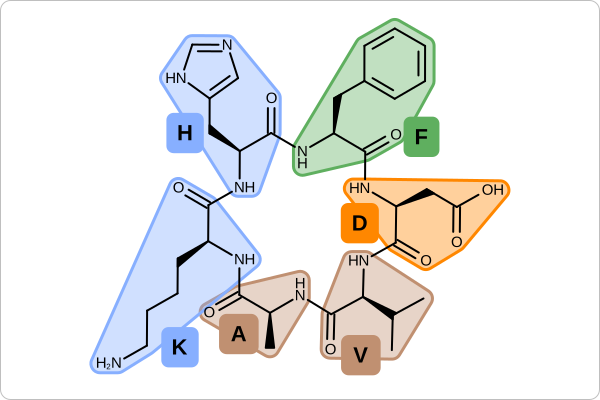
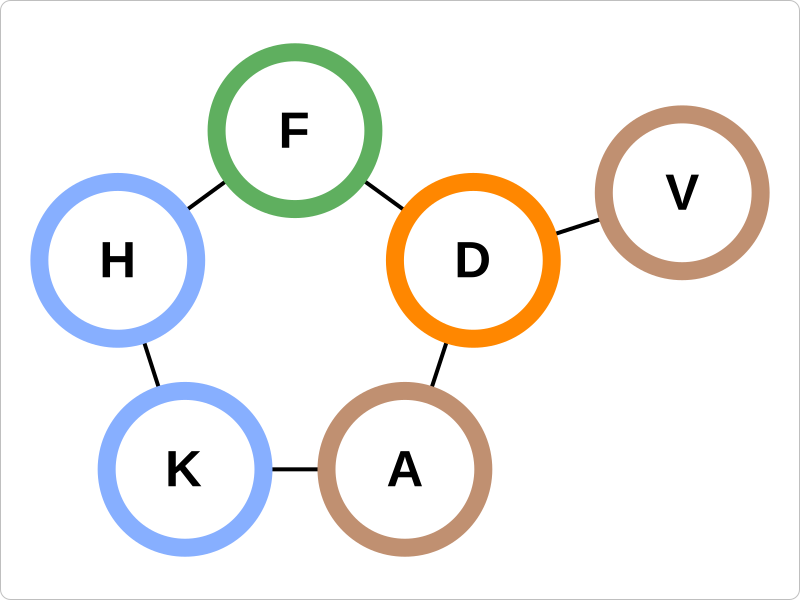
Cyclization of peptides is a common strategy to enhance their stability and bioactivity. Some peptides are cyclized through their backbone, while others are cyclized through side-chain connections or a combination of both.
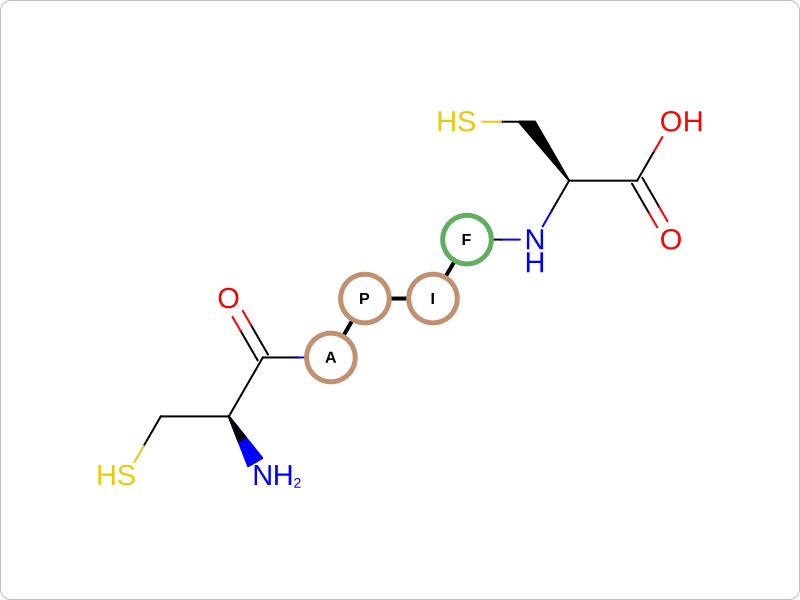
The HELM notation allows to connect peptides by allowing to removing terminal atoms at connection points and to form a single bond between monomers. The following examples demonstrate how to represent cyclic peptides.
|
|
|
PEPTIDE1{C.A.P.I.F.C}$PEPTIDE1,PEPTIDE1,1:R3-6:R3$$$ |
|
|
|
PEPTIDE1{K.A.P.I.F.A}$PEPTIDE1,PEPTIDE1,1:R3-6:R2$$$ |
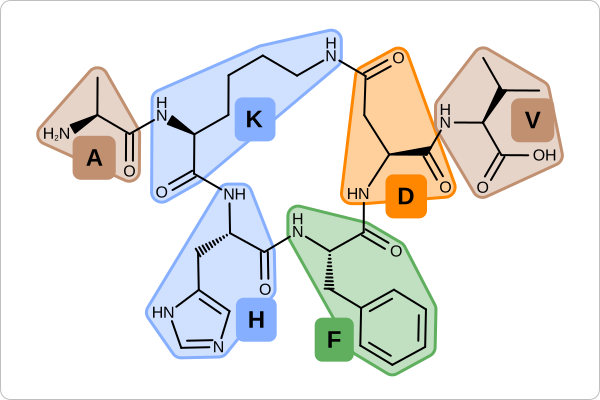
head to tail PEPTIDE1{A.K.H.F.D.V}$PEPTIDE1,PEPTIDE1,1:R1-6:R2$$$ |
|
|
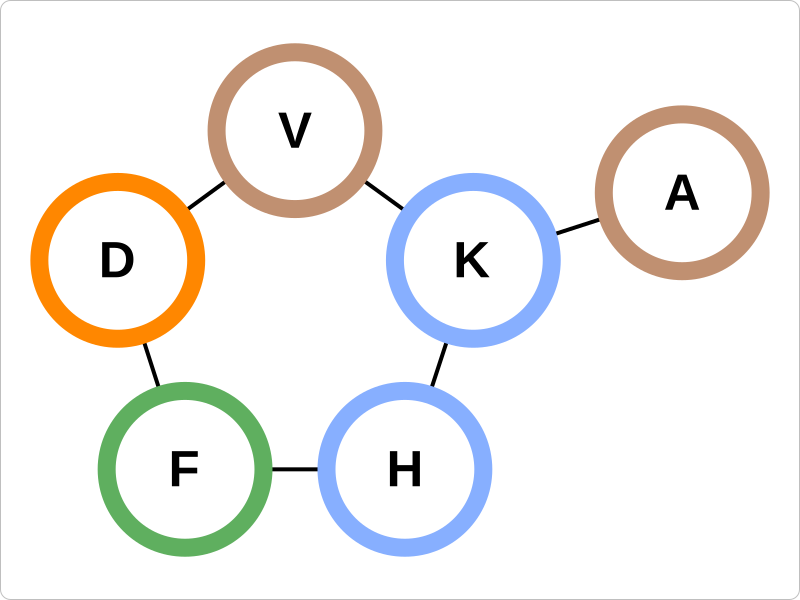
head to side PEPTIDE1{A.K.H.F.D.V}$PEPTIDE1,PEPTIDE1,1:R1-5:R3$$$ |
|
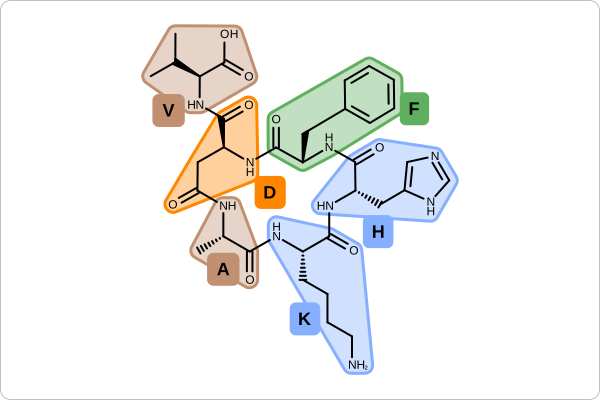
|
tail to side PEPTIDE1{A.K.H.F.D.V}$PEPTIDE1,PEPTIDE1,2:R3-6:R2$$$ |
|
|
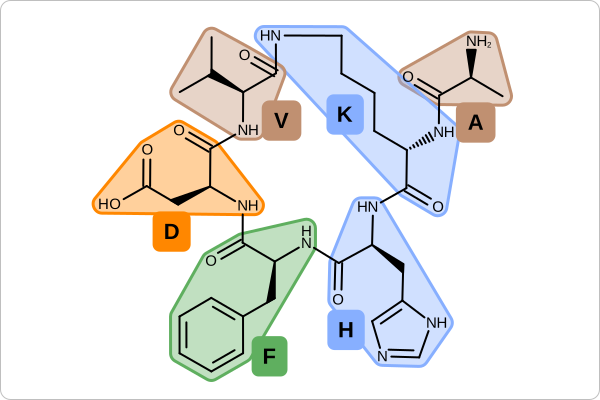
side to side PEPTIDE1{A.K.H.F.D.V}$PEPTIDE1,PEPTIDE1,2:R3-5:R3$$$ |
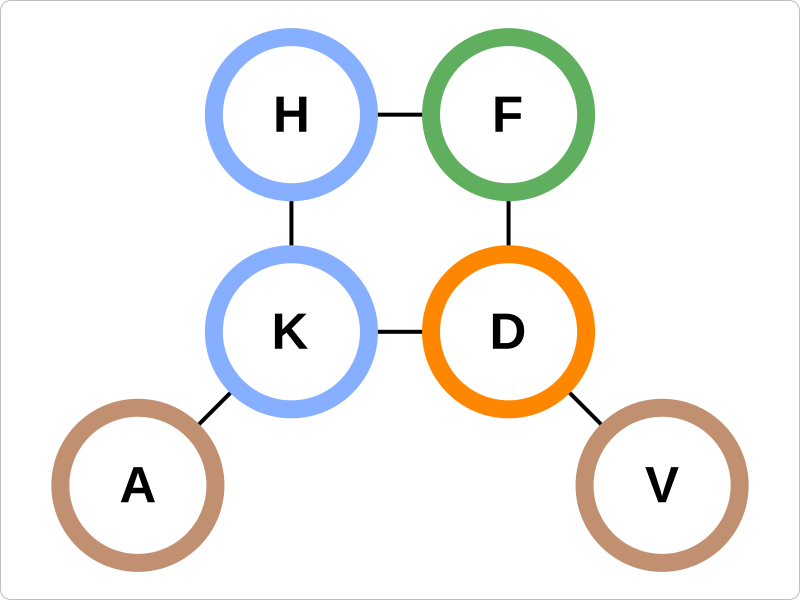
|
|
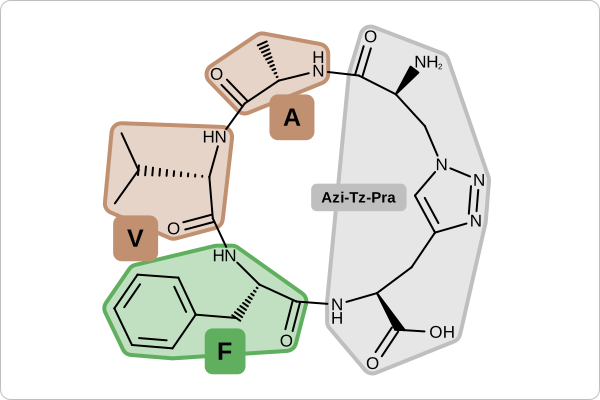
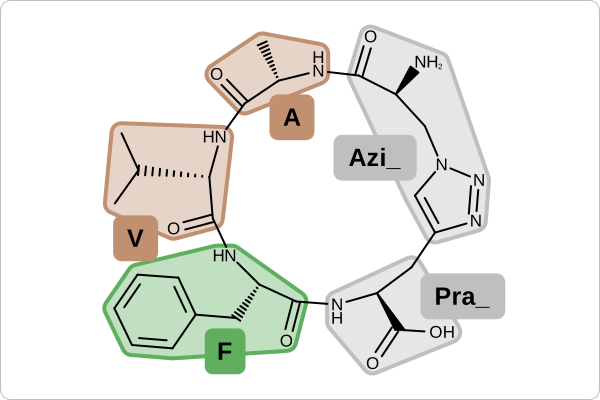
More complex cyclization reactions, such as the azide-alkyne cyclo-addition shown below, present challenges for representation in HELM. HELM is a product notation that describes the final structure rather than the synthetic pathway or starting materials. Consequently, the diversity of synthetic routes cannot be directly encoded in HELM notation.
The limitation stems from the fact that HELM notation only allows a single bond between monomers and removes terminal atoms at connection points as needed. This constrains its expressiveness compared to other representations like SMIRKS, which can define complex chemical transformations.
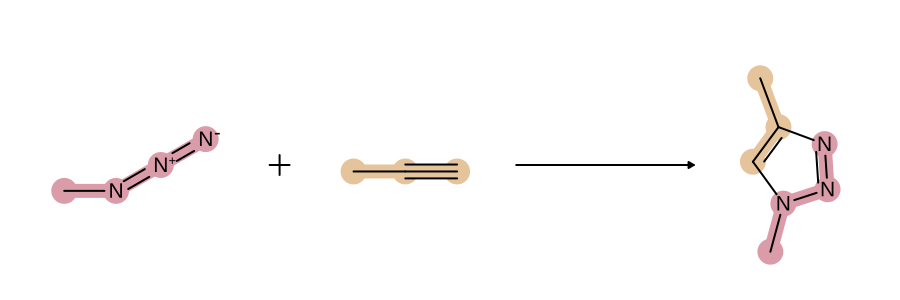
Azide-Alkyne cycloaddition
There are several ways to represent such cyclization in HELM notation.
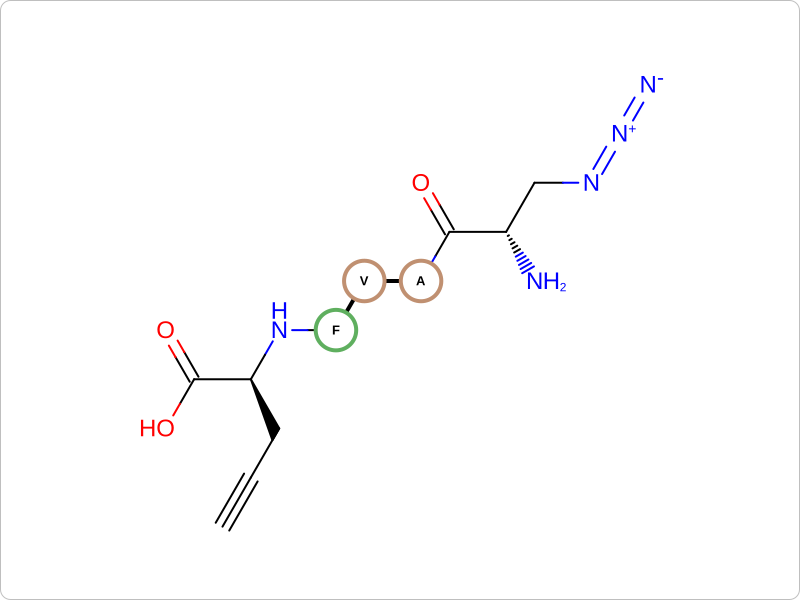
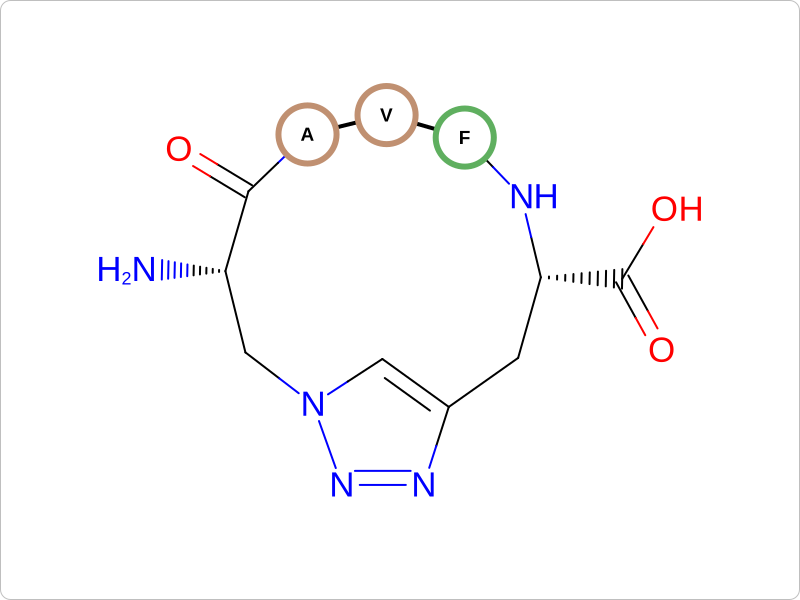
Define a surrogate monomer that represents the two amino acids joined by the triazole ring formed during the cyclo-addition reaction.
|
|
|
PEPTIDE1{A.V.F}|CHEM2{[Azi-Tz-Pra]}$CHEM2,PEPTIDE1,1:R1-3:R2|CHEM2,PEPTIDE1,1:R2-1:R1$$$ |
Where the surrogate monomer can be defined as:
{
  "smiles": "[R1]N[C@@H](Cc1cn(nn1)C[C@@H](C(=O)[R2])N)C(=O)O",
  "polymer_type": "Chem",
  "codes": {
    "OpenEye": "Azi-Tz-Pra"
  }
}
Try to mimic the cyclization with two surrogate amino acid monomers with pseudo-connection points.
|
|
|
|
PEPTIDE1{[Azi_].A.V.F.[Pra_]}$PEPTIDE1,PEPTIDE1,1:R3-5:R3$$$ |
Where the surrogate monomers can be defined as:
{
  "smiles": "[H:1]N[C@@H](C([U:3]))C(=O)[OH:2]",
  "codes": {
    "OpenEye": "Pra_"
  }
},
{
  "smiles": "[H:1]N[C@@H](Cn1cc([U:3])nn1)C(=O)[OH:2]",
  "codes": {
    "OpenEye": "Azi_"
  }
Note
Using U (unarium) or other uncommon elements to represent the connection atom in the monomer
ensures that the monomer will only be used in the context of cyclization and will not match any
other structures in the peptide.