How-To Guides for Structure Prediction Floes
How do you appropriately name a Boltz constraint?
Boltz constraints give an added level of control over the final predicted structure by adding additional knowledge the user may have, such as experimental data. All references to residue values in a Boltz constraint require a chain ID and a base-1 sequence order of the residue. All references to a co-folding ligand only require the chain ID, and only one ligand should be defined for its given chain ID.
How do you interpret pose errors?
When running a structure prediction with a ligand co-folder, the resulting ligand structure is not guaranteed to have the same SMILES structure that was used as input. The pose error checker will inspect the predicted ligand and compare it to the input ligand. These checks closely follow PoseBusters [Buttenschoen-2024] by checking the chemical, intermolecular, and intramolecular validity of the predicted ligand pose. The pose checks in this suite reimplement the same checks as PoseBusters using OpenEye’s OEChem TK.
Pose errors are reported in the output record from the Protein Sequence to AI Folded Structure Prediction Floe. The AIFold Pose Error Count will return the number of red flags that were raised during the pose error check, and the AIFold Pose Failure Warnings describe the specific issues that were found. Any red flag(s) should be grounds to reevaluate the validity of the prediction, including any associated affinity predictions.
To highlight the importance of pose errors, consider two examples: (1) Input ligand tautomers are not respected during predictions, and (2) unstable or uncommon chemistry is confidently ignored. In both cases, the pose checker identified the mismatches between the input SMILES and predicted ligand structures.
In the first example, we predict the 1JTK protein co-folded with its crystallographic THU ligand. The predicted structure contains a ligand whose atom coordinates form an aromatic six-membered ring with double-bonded carbons. However, based on the input SMILES string “C1CN(C(=O)NC1=O)C2CC(C(O2)CO)O”, the six-membered ring should not be aromatic and should not contain a flat conformation.
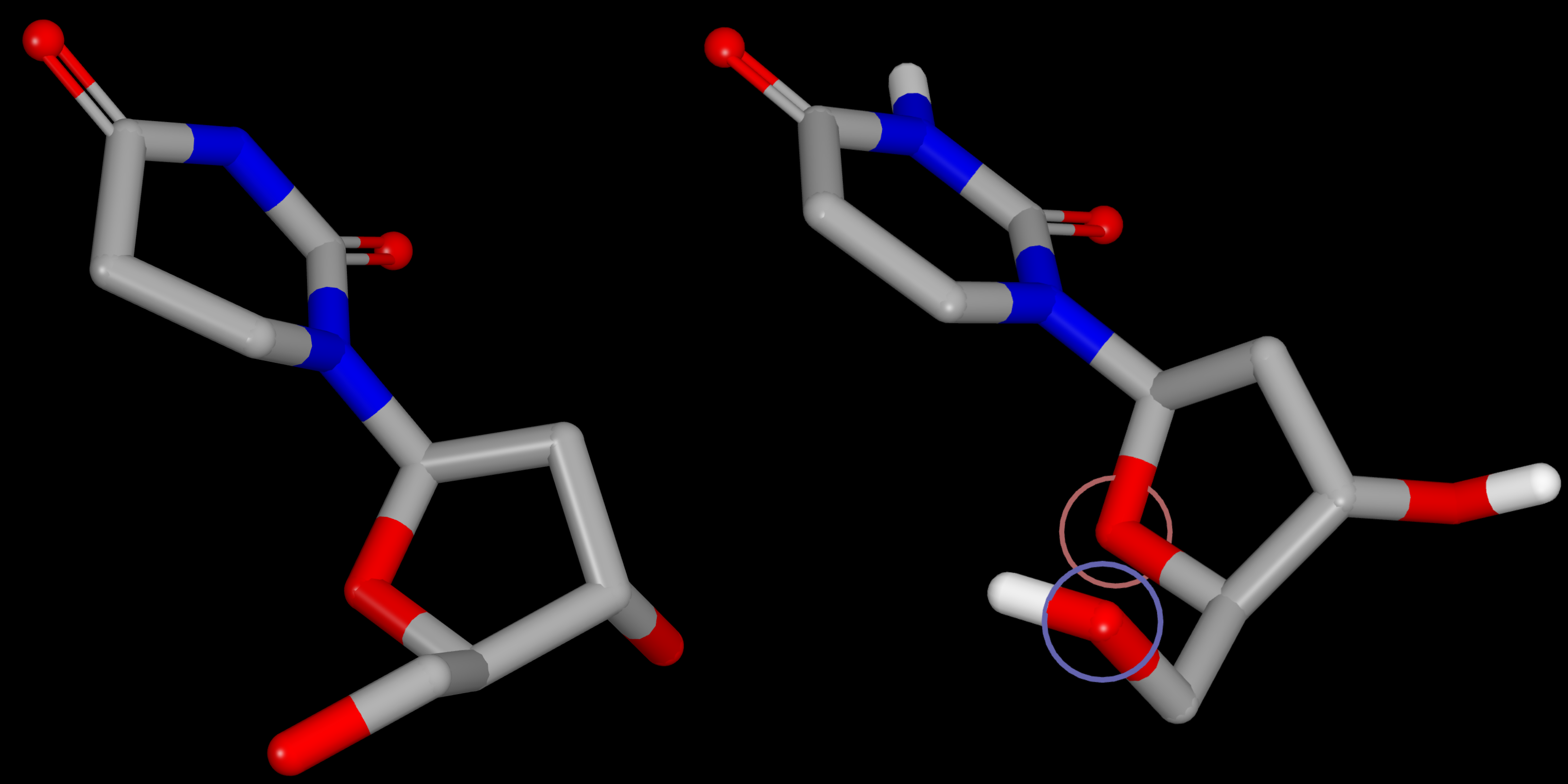
Figure 1. OMEGA conformation of the THU ligand (left) compared to the AI-predicted ligand structure (right). The predicted ligand has a flat six-membered ring which suggests aromatic structure and double bonded carbons.
This structural difference introduces aromaticity that is not present and bond orders that were not specified in the input ligand, effectively generating a tautomer of the input. The resulting affinity prediction should therefore be invalid because the model is scoring the wrong chemical species; yet the predicted affinity of -5.1 kcal/mol at a ligand ipTM of 0.93 gives no indication that the underlying pose is chemically incorrect, or minimally not what the user requested. The pose checker caught this inconsistency, flagging the prediction with an “overly flat nonaromatic moiety” and failed check.
The second example predicts the protein 8OU4 using the ligand SMILES string “C1CC(=O)NC(=O)[C@H]1NC(=O)C2CC=C=C=C2” which includes two fictitious sp1 hybridized carbons inside a six-membered ring. The predicted system structure has very high confidence scores with a complex pLDDT of 0.95 and a ligand ipTM of 0.82. This could lead to trusting the predicted affinity score of -6.7 kcal/mol; however, only the pose checker recognized the bond angle issues. The generated ligand structure looks more like an unstrained benzene than the strained ring that was requested in the input.
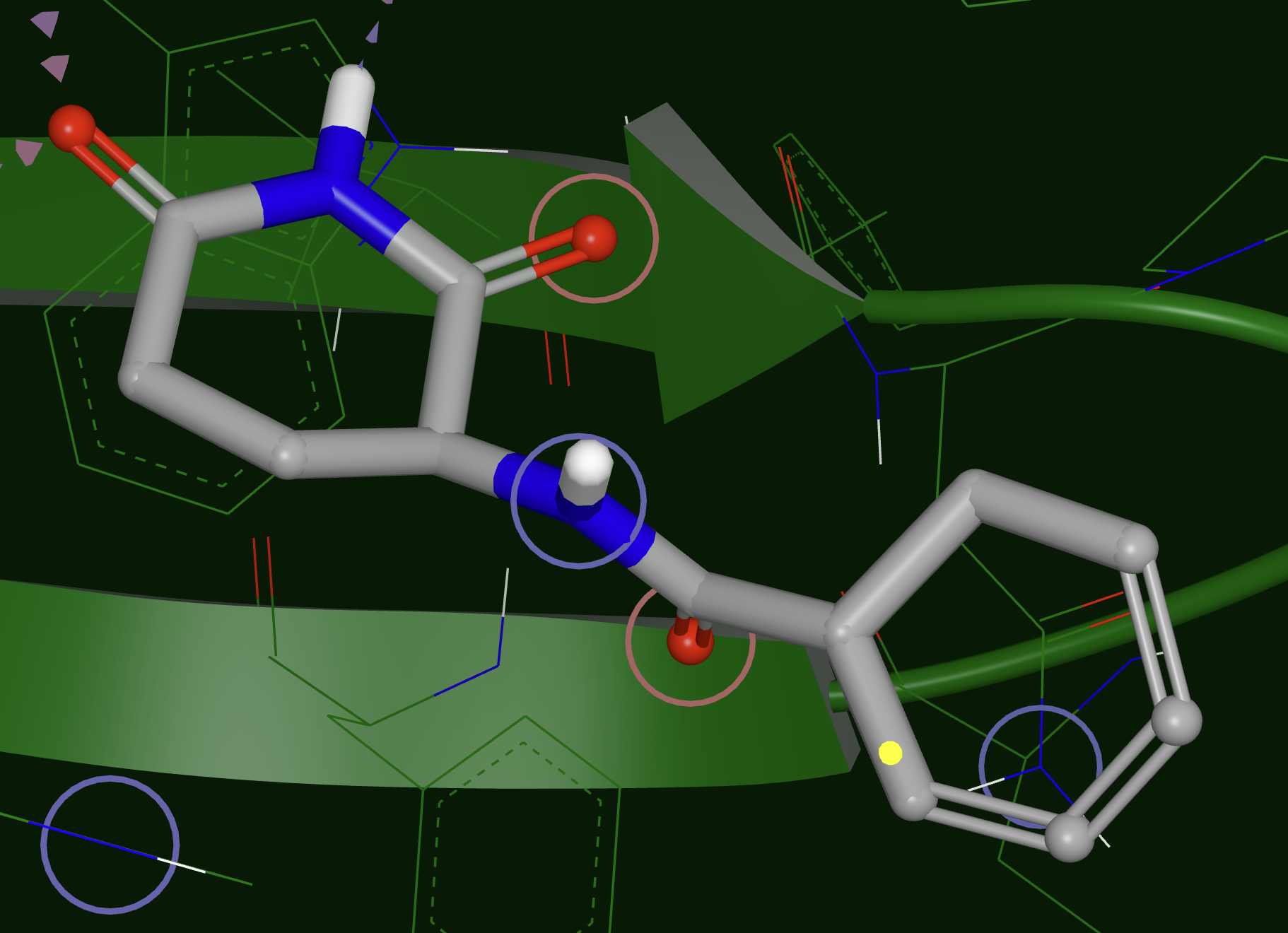
Figure 2. Fictitious sp1 hybridized carbons in a six-membered ring do not display chain strain and instead generate a benzene-like structure.
This extreme example highlights that ligand structure predictions refuse to enforce uncommon or unstable chemistry. Boltz-2 will instead confidently generate atomic coordinates different from the input chemistry if it deems those positions more valid and does so without warnings.